Alaska
Ketchikan vacation rentals
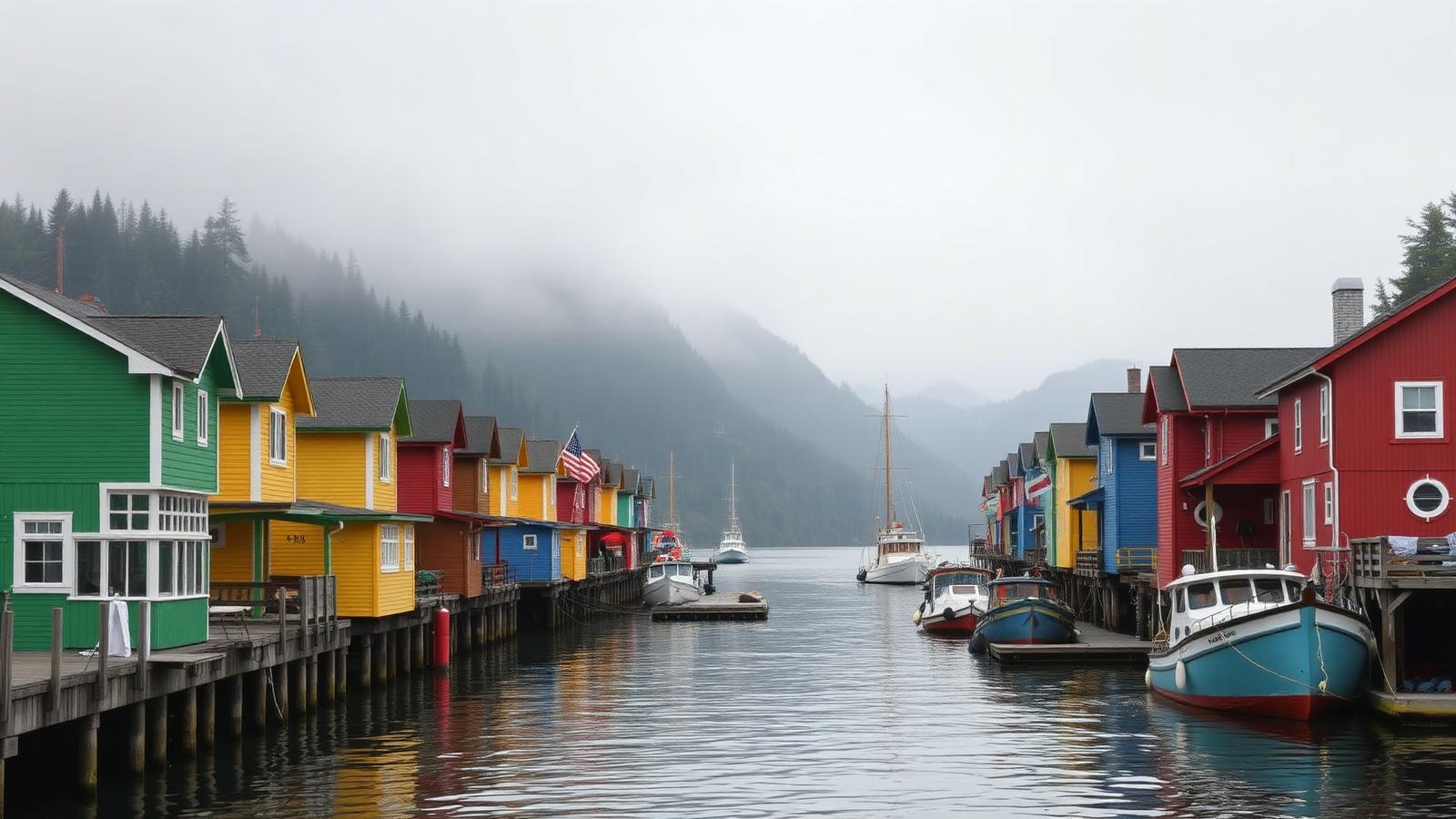
Alaska's first city — a rainforest fishing town of stilt houses, totem poles and floatplanes at the doorstep of Misty Fjords.
Best time to visit
Mid-May through mid-September for the longest days, active fishing and reliable floatplane weather. Late July and August bring the biggest salmon runs; May and June are drier by Ketchikan standards. Expect rain year-round — this is a temperate rainforest that averages over 140 inches annually.
Rental types
Waterfront cabins with float access · Downtown apartments near Creek Street · Cottages on the Tongass Highway · Remote lodges reachable by boat or floatplane · Family homes with freezers and gear storage · Studio suites with harbor views
Getting there
There are no roads into Ketchikan — every arrival is by air or water. Alaska Airlines flies daily from Seattle into Ketchikan International Airport, which sits on Gravina Island; a 5-minute ferry crosses the Tongass Narrows to town on a fixed schedule worth checking before you book a late flight. The Alaska Marine Highway ferry connects Ketchikan to Bellingham, Washington, to Prince Rupert, British Columbia, and northward to Wrangell, Petersburg, Sitka and Juneau — a slow, scenic and genuinely practical way to arrive, and the only way to bring your own car.
Ketchikan as a stay, not a stop
Most people see Ketchikan for six hours between cruise-ship gangways, which is why it is so widely misunderstood. Stay a week and the town reveals itself as a working commercial-fishing port of about 8,000 people on Revillagigedo Island, wedged between saltwater and a wall of rainforest, with more standing totem poles than anywhere on earth and one of the great salmon runs of Southeast Alaska passing straight through the middle of downtown.
The rhythm of a rental stay here is different from a shore excursion. You rise early because the light does, you check the tide table before deciding anything, and you plan around weather windows for the floatplane. Between those, you fish, hike, cook what you caught, and watch eagles work the Narrows from the deck.
Ketchikan is also the most accessible Southeast Alaska town from the Lower 48 — a two-hour flight from Seattle with no connection through Anchorage. That makes a five- to seven-day rental trip realistic in a way most of the region is not.
Ketchikan vacation rentals: cabins, apartments and waterfront homes
Inventory is small and seasonal, and it books early. Downtown apartments and suites put you steps from Creek Street and the tunnel. Homes and cabins along the North and South Tongass Highway sit on the water with private beaches and views of floatplanes landing in the Narrows. A handful of off-road cabins reached by boat or floatplane offer real remoteness.
Because so many visitors come to fish, rentals here often include things you would never see in a beach listing: chest freezers for your catch, fish-cleaning stations, drying space for boots and rain gear, crab pots, and covered parking for a boat trailer. If you are booking a fishing week, ask about freezer capacity specifically — a good run of salmon and halibut needs more than a kitchen freezer holds.
Practical checks before booking: whether the property is on the road system or requires water access, distance to the nearest grocery store, whether the airport ferry timing works with your flights, and whether internet is adequate if you plan to work remotely. Summer stays commonly carry three- to five-night minimums, and June through August fills months ahead.
- Waterfront cabins with private beach and float access
- Downtown apartments within walking distance of Creek Street
- Tongass Highway homes with freezers and gear storage
- Harbor-view suites near Bar Harbor and Newtown
- Remote fly-in or boat-in cabins for full immersion
- Larger family homes suited to multi-generation fishing trips
Downtown, Creek Street and the totem heritage
Creek Street is a boardwalk of buildings on pilings above Ketchikan Creek, once the town's red-light district and now galleries, shops and small museums including Dolly's House. In late July and August, salmon push up the creek directly beneath the boardwalk, and the fish ladder near the Deer Mountain hatchery is one of the easiest wildlife shows in Alaska.
Ketchikan holds the world's largest collection of standing totem poles, and seeing them well takes more than one stop. The Totem Heritage Center preserves 19th-century originals recovered from abandoned Tlingit and Haida village sites — unrestored, weathered and genuinely moving. Saxman Native Village to the south and Totem Bight State Historical Park to the north display carved replicas in outdoor settings, and both have working carving sheds where you can watch artists at their trade.
The Southeast Alaska Discovery Center downtown is the best orientation to the Tongass, regional ecology and Native cultures — worth an hour on your first rainy afternoon, and there will be a rainy afternoon.
Misty Fjords and the Tongass National Forest
Misty Fjords National Monument covers 2.3 million acres of sea cliffs, hanging valleys and waterfalls dropping straight into saltwater: Yosemite-scale granite drowned by the ocean. It lies 22 air miles east of town, and the classic visit is a floatplane flightseeing trip with a water landing in Rudyerd Bay or Punchbowl Cove. Longer boat-and-fly combinations give you time on the water and better odds with wildlife.
Ketchikan sits inside the Tongass National Forest, the largest national forest in the United States, and the road system alone offers serious hiking. Deer Mountain climbs from near downtown to alpine views over the Narrows. The Ward Lake loop is easy and beautiful with kids. Perseverance Lake, Rainbird Trail and the Settlers Cove beach walks span everything from boardwalk stroll to steep muskeg climb.
Kayaking is superb and underrated: sheltered paddling in Clover Pass and around Pennock Island, guided trips through the Tatoosh Islands, and multi-day expeditions into Misty Fjords for the experienced. Water taxis will drop you and your boat where the road ends.
- Floatplane flightseeing with a water landing in Misty Fjords
- Hike Deer Mountain from the edge of downtown
- Easy Ward Lake and Perseverance Lake trails
- Sea kayak Clover Pass, Pennock Island or the Tatoosh Islands
- Beachcomb and tidepool at Settlers Cove and Mountain Point
- Walk the totem parks at Saxman and Totem Bight
Fishing and wildlife
Fishing is why many people book a house here for a week. King salmon peak from mid-May through June, silvers run heaviest in August, and pinks and sockeye fill in between. Halibut is available all summer, and Dungeness crab and shrimp are a real bonus if you have a boat or a rental with pots. Charter captains work out of Knudson Cove and the downtown harbors, and half-day trips are plenty for most families.
You do not need a boat to fish well. Mountain Point on the South Tongass is a productive shore-cast spot for salmon, and creek mouths along both highways draw fish on the tide. Nonresident licenses and king salmon stamps are sold online and at tackle shops in town — buy the stamp if there is any chance of a king.
Wildlife here is constant rather than staged. Bald eagles line the Narrows, black bears fish the creeks and the Herring Cove area from late July, harbor seals and sea lions work the harbors, and humpbacks and orcas move through the Narrows and Clover Pass all summer. Deer, mink and river otter turn up on quiet roads. Bring binoculars; you will use them from the deck.
Weather, seasons and the best time to visit
Ketchikan is a temperate rainforest, and rain is a feature rather than an aberration — the town averages roughly 140 to 150 inches a year, and locals own good shells rather than umbrellas. Summer highs sit in the low 60s Fahrenheit, and even a fine August day can turn from sun to squall in an hour.
Mid-May through mid-September is the practical season: long daylight, active fishing, running floatplanes and full restaurant hours. May and June are the driest stretch. Late July and August bring the biggest salmon runs and the most bear activity along with the wettest weather of the summer.
Late September and October empty out — cheaper rentals, dramatic weather, fine hiking in cool air, most tours winding down. Winter is quiet, dark and mild rather than frigid, with rain more often than deep snow; a winter stay is for people who want the town, not the tours. Whenever you come, leave a flexible day in the itinerary so a weathered-out flightseeing trip can be rescheduled.
Food, provisioning and dining
Downtown restaurants lean toward fresh local seafood — halibut, salmon, spot prawns, Dungeness crab — with a handful of solid year-round places in Newtown that stay open when the ships stop coming. Hours contract sharply outside summer, so check before driving out for dinner in shoulder season.
If your rental has a kitchen, provision deliberately. Ketchikan has only a couple of full grocery stores, and prices run well above Lower 48 averages because everything arrives by barge. Many long-stay visitors bring pantry staples and buy fresh fish locally. Processors and the docks sell direct, and charters will usually fillet and vacuum-pack your catch, often arranging frozen shipping home.
Coffee culture is real here, and the downtown bakeries make a good rainy-morning ritual before a hike.
Getting around Ketchikan
The road system is a single ribbon roughly 30 miles long along the shoreline — you cannot drive out of town, only up and down it. A rental car is the biggest quality-of-life upgrade for a stay outside downtown, and the local fleet is small enough that summer cars sell out weeks ahead. Book the car when you book the rental.
Downtown itself is walkable, and the local bus runs the main corridor between the ferry terminal, downtown and points north on a limited schedule. Taxis exist; rideshare coverage is thin. For anything off the road system, floatplanes and water taxis are the local equivalent of a highway.
Remember the airport ferry: the airport sits on a separate island, and the crossing plus wait adds 20 to 30 minutes to every arrival and departure. Confirm the schedule against your flight times, especially for early-morning departures.
Practical travel tips
Pack for rain seriously: a waterproof shell, waterproof boots and quick-dry layers matter more than heavy warm clothing, and cotton is the wrong choice. Rubber boots are so normal here that locals call them Ketchikan sneakers, and you can buy a pair in town for less than you would expect.
Check the tide tables daily — they govern beach walks, tidepooling, kayak launches and shore fishing, with swings of 15 feet or more. Bear awareness applies on creek trails from July onward: make noise, keep your distance, never approach a fishing bear, and store food properly at remote cabins.
Book weather-dependent trips early in your stay so there is room to reschedule, buy fishing licenses online before you arrive, and if you plan to fly home with fish, sort out freezer and shipping logistics on day one rather than the night before.
- Bring a waterproof shell and boots, not an umbrella
- Reserve a rental car well ahead for summer stays
- Confirm airport ferry timing against your flights
- Buy nonresident fishing licenses and king stamps in advance
- Schedule Misty Fjords flightseeing early for a weather buffer
- Ask about freezer space if you are fishing a full week
Nearby destinations
Ketchikan anchors a wider Inside Passage trip well. Prince of Wales Island is a short ferry ride west, with backcountry logging roads, caves and excellent fishing. Wrangell, Petersburg, Sitka and Juneau connect north by Alaska Marine Highway ferry or short flights. To the south, the ferry runs to Prince Rupert, British Columbia, and on to Bellingham, Washington, for travelers building a longer overland-and-water route.
- Misty Fjords National Monument — 22 air miles east
- Prince of Wales Island — about 3 hours by ferry west
- Wrangell — short flight or ferry north
- Juneau — about 1.5 hours by air
- Prince Rupert, British Columbia — ferry south
Where to stay in Ketchikan
Downtown & Creek Street
The historic core: a boardwalk of stilt buildings over Ketchikan Creek, the Southeast Alaska Discovery Center, galleries and restaurants. Rentals are apartments and small suites, best if you want to walk everywhere and watch salmon run beneath your window in August.
Newtown & Bar Harbor
Just north of downtown around the commercial fishing harbors, with grocery stores, the hospital and everyday services close by. Quieter than downtown and convenient for longer stays, with harbor-view apartments and hillside houses.
North Tongass Highway
The residential stretch running 18 miles north toward Settlers Cove, lined with waterfront cabins and homes on the Narrows. Ideal with a rental car if you want a private beach, eagles overhead and space to hang wet gear.
South Tongass Highway & Saxman
South of town past Saxman Native Village and its totem park toward Herring Cove and Beaver Falls. Waterfront cottages here sit close to late-summer bear viewing.
Ward Cove & Ward Lake
A forested valley 7 miles north with lake trails, creek fishing and campgrounds. Cabins feel like a rainforest retreat while staying 15 minutes from downtown.
Mountain Point & Herring Cove
South-end waterfront with beach access, tidepools and one of the best shore-fishing spots on the road system. Good for families who want a private beach rather than a boardwalk.
Knudson Cove & Settlers Cove
The far north end of the road, near the boat launch most fishing charters use and Settlers Cove State Recreation Site. Quiet, wooded and best for anglers with an early charter.
Remote & off-road cabins
Forest Service and private cabins on nearby islands and inlets, reached by floatplane or water taxi. No cars, sometimes no grid power — the choice for a genuinely remote Alaska week.
Ketchikan FAQs
Is Ketchikan worth visiting if you are not on a cruise?
Yes, and it is arguably better. Independent visitors get the salmon runs, the Tongass trails, the fishing charters and the floatplane trips without a six-hour clock, and a rental with a kitchen and a freezer turns fishing into part of the trip. Alaska Airlines flies direct from Seattle in about two hours.
What kind of vacation rentals does Ketchikan have?
Mostly waterfront cabins and homes along the Tongass Highway, apartments and suites downtown near Creek Street, harbor-view units in Newtown, and a few remote cabins reached by floatplane or boat. Many include freezers, fish-cleaning stations and gear-drying space because so many guests come to fish.
When is the best time to visit Ketchikan?
Mid-May through mid-September. May and June are the driest with long daylight and peak king salmon; late July and August bring the biggest silver runs and the most bear activity along with the heaviest rain. Late September and October are quiet, cheap and still good for hiking.
How much does it rain in Ketchikan?
A lot — roughly 140 to 150 inches a year, spread across most months. Plan on rain during any stay and bring a waterproof shell and boots rather than an umbrella. Locals treat it as normal, and most activities run rain or shine except floatplane flightseeing, which needs a weather window.
Do I need a car in Ketchikan?
If you stay downtown, no — it is walkable and the bus covers the main corridor. For a cabin on the Tongass Highway, a fishing charter at Knudson Cove or trailheads at Ward Lake and Settlers Cove, yes. The rental fleet is small, so reserve a car as early as you book the house.
Can you visit Misty Fjords from Ketchikan?
Yes. Floatplane flightseeing trips with a water landing in Rudyerd Bay or Punchbowl Cove take a couple of hours round trip, and longer boat-and-fly combinations add time on the water. Book early in your stay so weather delays can be rescheduled.
Is Ketchikan good for families?
Very much so. Salmon in the creek downtown, easy trails at Ward Lake, tidepools at Mountain Point, totem parks and half-day fishing charters all suit kids. Bring rain gear for everyone and expect to plan around the tide and the weather rather than a fixed schedule.
Keep planning
How to Choose the Perfect Vacation Rental: A Step-by-Step Guide
The difference between a great rental and a regrettable one is decided before you ever click book. Here's the process seasoned renters use.
8 min read

Vacation Rental vs. Hotel: Which Is Right for Your Trip?
Neither wins every trip. Here's the honest math on cost, space, and convenience so you can pick the right tool for each vacation.
6 min read
Save this guide to your account for later.
Traveler reviews
Have you been here? Share your experience.
Loading reviews…
Discussion
Questions or tips? Join the discussion.
Loading comments…